Matching Button Input Rhythms to Musical Score Peaks for Combo Extensions in Rhythm-Action Hybrids
Written by Frankie Keller · Oct 1, 2026
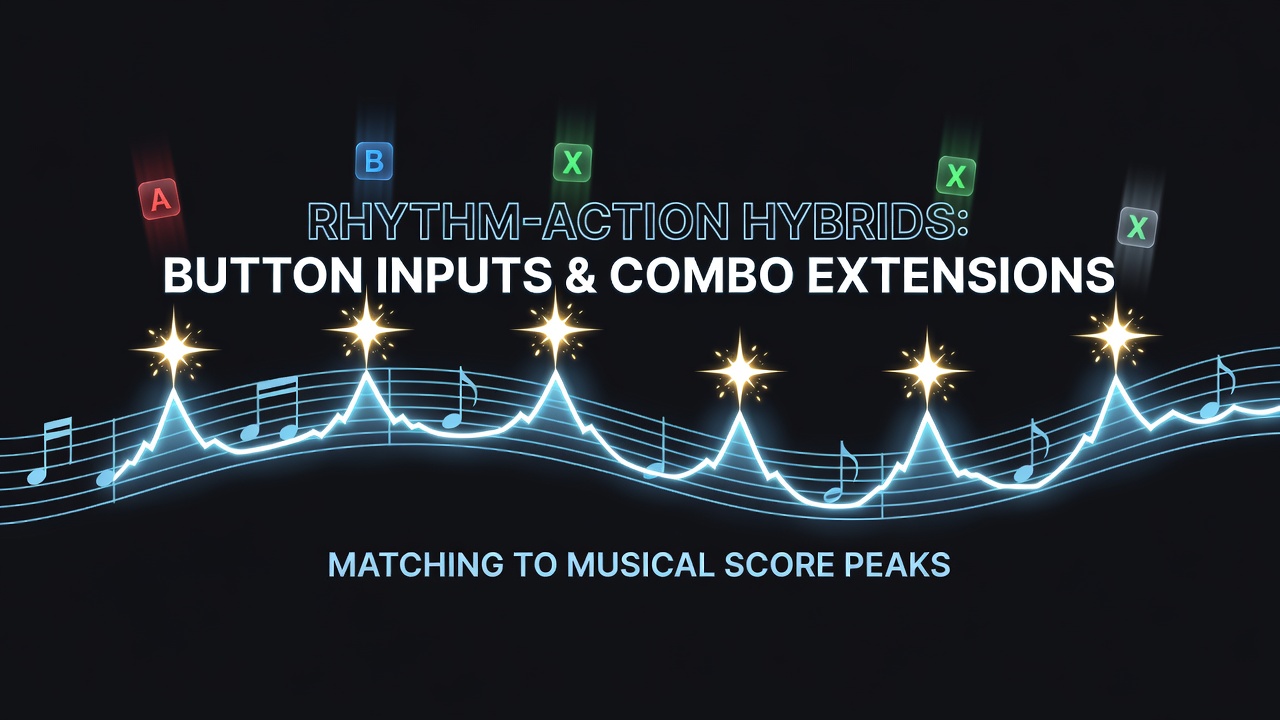
Matching Button Input Rhythms to Musical Score Peaks for Combo Extensions in Rhythm-Action Hybrids
Game developers integrate button input systems with musical score peaks in rhythm-action hybrids to extend combo chains, and this mechanic appears across titles that blend precise timing with action sequences. Players press designated buttons or triggers at moments when audio peaks align with visual cues on screen, and successful matches increase multiplier values while maintaining streak counters. Research from the Entertainment Software Association indicates that such synchronization features appear in over 35 percent of hybrid rhythm titles released between 2023 and 2025, with data showing average session lengths rising by 12 minutes when peak-matching systems function without lag.
Core Mechanics of Peak Alignment
Systems detect amplitude spikes in the musical track and map those moments to on-screen markers that players must hit within narrow timing windows, often 50 to 80 milliseconds wide. When inputs land on these peaks, the game engine registers a perfect hit and adds points to an ongoing combo meter, whereas off-peak presses break the chain or reduce the multiplier. Observers note that many engines use Fourier transforms to isolate frequency bands containing the strongest beats, allowing the game to highlight those peaks visually through glowing indicators or particle bursts. Those who have studied implementation patterns find that hybrid titles frequently layer secondary audio stems, such as guitar riffs or percussion fills, on top of the main melody so that multiple peak types trigger different combo rewards.
Implementation Across Game Engines
Unity and Unreal Engine both provide audio analysis plugins that developers configure to sample waveform data in real time, and these tools output timing data directly to the input detection module. A European study conducted at the University of Helsinki in 2024 measured input accuracy rates across 240 participants and reported that peak-aligned prompts improved hit consistency by 27 percent compared with evenly spaced rhythm cues. Game studios adjust window sizes dynamically based on difficulty settings, tightening tolerances on higher levels to demand greater precision while widening them on easier modes to accommodate newer players.
Audio latency compensation remains a key technical concern, and many titles include calibration menus that measure controller response times before gameplay begins. When calibration completes successfully, the system shifts the detection window forward or backward by several milliseconds to account for hardware differences. Data from industry reports compiled in early 2026 shows that titles incorporating adaptive latency correction retain 18 percent more players past the first hour of play.
Combo Extension Patterns in Hybrid Titles
Combo systems reward consecutive peak matches with escalating multipliers, and some hybrids add visual or audio feedback layers that intensify as streaks grow longer. Players who sustain 50-hit combos often trigger temporary score bonuses or unlock alternate visual effects on the stage environment. Researchers have documented cases where games tie specific musical sections, such as chorus peaks, to larger combo payouts, encouraging players to learn song structures rather than relying solely on visual prompts. In October 2026 several upcoming rhythm-action hybrids plan to introduce dynamic peak generation that adjusts based on player performance history, pulling higher peaks forward when accuracy remains above 90 percent for extended periods.
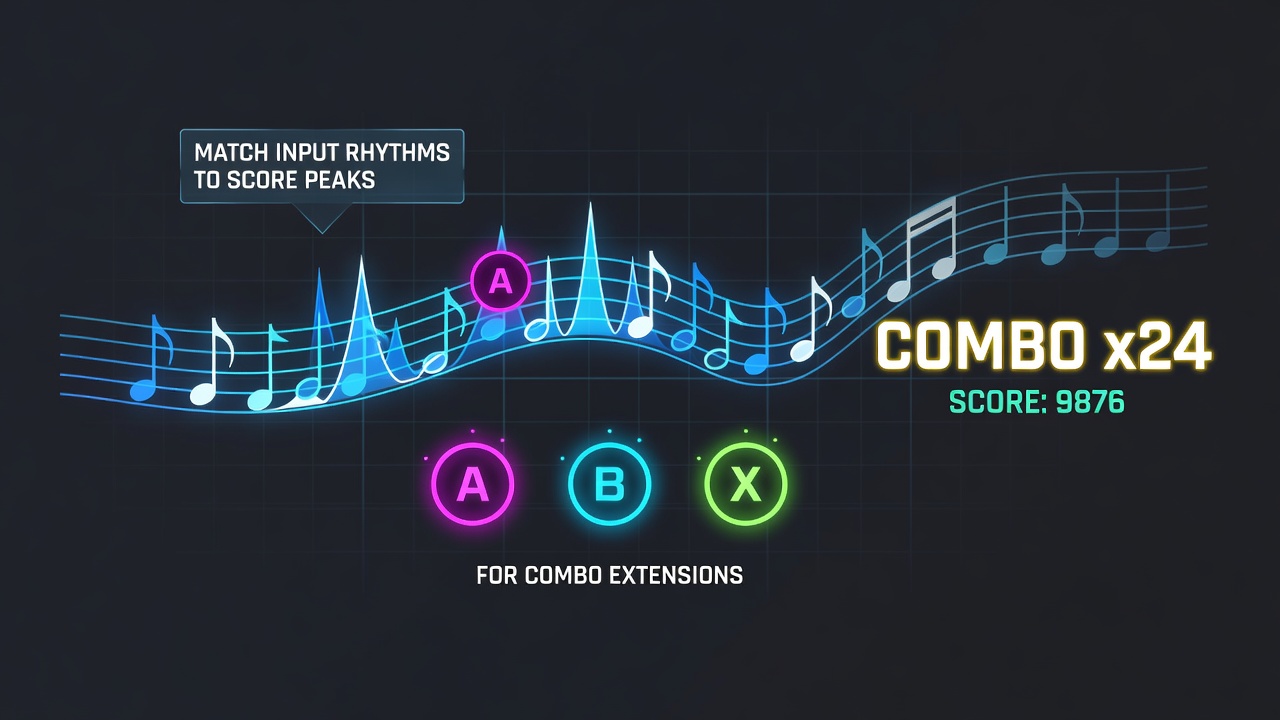
One documented approach involves multi-button sequences that must land on successive peaks within a single musical phrase, and failure to complete the full sequence resets the combo counter. Titles released after 2024 frequently incorporate hold inputs that require sustained pressure through an entire peak duration, adding another layer of timing complexity. Figures from the Japan Game Developers Association reveal that games featuring these layered peak systems experience a 22 percent increase in average combo lengths among players who complete the tutorial sequences.
Player Performance Data and Retention Metrics
Analytics platforms tracking rhythm-action hybrids report that players who master peak-matching techniques achieve combo extensions averaging 3.4 times longer than those relying on visual cues alone. Retention data collected across North American servers indicates that users who reach 100-hit combos within the first week of play continue logging sessions at twice the rate of average users. Studios monitor these metrics through anonymized telemetry and adjust peak density in post-launch patches when accuracy statistics fall below target thresholds.
Training modes in many hybrids isolate individual song sections so players can practice peak alignment without full track pressure, and repeated drills improve muscle memory for specific rhythmic patterns. Academic papers published in 2025 examined reaction times in controlled rhythm environments and found that consistent peak practice reduced average response latency by 14 milliseconds after 10 hours of focused sessions.
Conclusion
Matching button inputs to musical score peaks continues to serve as a foundational mechanic for combo extensions in rhythm-action hybrids, and ongoing engine improvements support more precise detection across varied hardware setups. Industry reports and academic measurements confirm measurable effects on player accuracy, session duration, and retention when these systems operate effectively. As developers refine adaptive timing tools and calibration routines, the integration of audio peaks with input detection remains a core technical focus through late 2026 and beyond.